


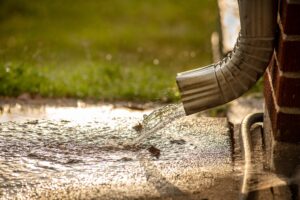
We’ve all been there – curled up on the couch with a movie while a massive storm howls outside. It’s cozy until you glance out the window and notice your gutters are acting less like “drainage” and more like Niagara Falls. When the sky opens up in a serious downpour, your downspouts have one very important job: get that water as far away from your foundation as possible. In Texas, this isn’t just about avoiding a muddy yard – it’s about protecting your home’s foundation from our famous shifting clay soil.
The “One Inch” Reality Check
Most homeowners underestimate just how much water hits their roof. Here’s a quick bit of “house math” for you: One inch of rain on a 1,000-square-foot roof produces about 600 gallons of water. Because Texas dirt is often “Blackland Prairie” or “Gumbo” clay, it doesn’t soak up water quickly after a dry spell. Instead, that water sits on top and puts massive pressure on your concrete slab. If you have a standard-sized home, you’re looking at thousands of gallons of water trying to squeeze through a few 3-inch vertical pipes in a matter of minutes.
3 Signs Your Downspouts Are Overwhelmed
If you see these “red flags” during the next big storm, your drainage system is sending an SOS signal:
- The Gutter “Waterfall”: If water is pouring over the sides of your gutters instead of going down the spout, you either have a clog or your downspouts are too small for the pitch of your roof.
- The “Moat” Effect: If you see standing water pooling right at the base of your downspout, that’s bad news. In Texas, uneven moisture is the #1 cause of foundation cracks. Water should be discharged at least 10 feet away from your home to keep the soil around your slab consistent.
- The Erosion Crater: Notice a deep hole in your mulch or dirt right under the spout? That’s high-pressure water telling you it has nowhere to go. Over time, that water will find the path of least resistance – which is usually straight into your foundation cracks.
How You Can Help Your House
You don’t necessarily need a brand-new roof to fix this. Usually, it’s about the “exit strategy”:
- Extensions are your best friend: If your downspout ends two feet from your house, head to the hardware store and grab an extension. Getting that water out to the lawn (or a rain garden) makes a world of difference.
- The Seasonal Flush: Twice a year, stick a garden hose up into the downspout from the bottom (or down from the top) to clear out the “gutter sludge” that slows down the flow.
- Consider Oversized Downspouts: Texas weather is famous for “Drought-to-Deluge” cycles. If you live in an area prone to sudden monsoons, upgrading from a standard 2×3 downspout to a 3×4 can nearly double the amount of water your system can handle.
When to Call in the Pros
Sometimes, a plastic extension isn’t enough. If you’re dealing with a soggy yard that never dries out, or if you’re seeing new cracks in your interior drywall after a rainy season, it’s time to talk about underground drainage solutions or a sump pump checkup.
After all, your home is likely your biggest investment. Don’t let a few inches of rain wash away your peace of mind.
Contact Rub-A-Dub Plumbing in Tyler, TX and the Surrounding Areas Today
If you need to have your sump pump checked or you have another plumbing or drainage issue you need resolved, give us a call today! We proudly offer expert plumbing services throughout Tyler and the surrounding areas.